Landscape Design
The Recharge Park
A park that does more than provide green space — it works with water, responds to climate and gives the neighbourhood a resilient landscape to grow around.
Envisioned as a climate-resilient public landscape of 2 Acres along the edge of Pudhu Thangai Lake, the Recharge Park transforms an urban open space into a living system where water, ecology and community life coexist. The design moves beyond the idea of a conventional recreational park by allowing the landscape itself to capture, slow, filter and absorb stormwater, while creating an engaging public realm for the surrounding neighbourhood.
The masterplan is organised around the site's existing natural and infrastructural features, including the existing water tank and well, integrating them into the landscape rather than treating them as isolated utilities. A network of rain gardens, bio-filtration basins, permeable paving and densely planted zones helps reduce surface runoff and encourages groundwater recharge. Strategically created mounds and depressions shape the movement of rainwater across the site while also adding spatial character to the park.
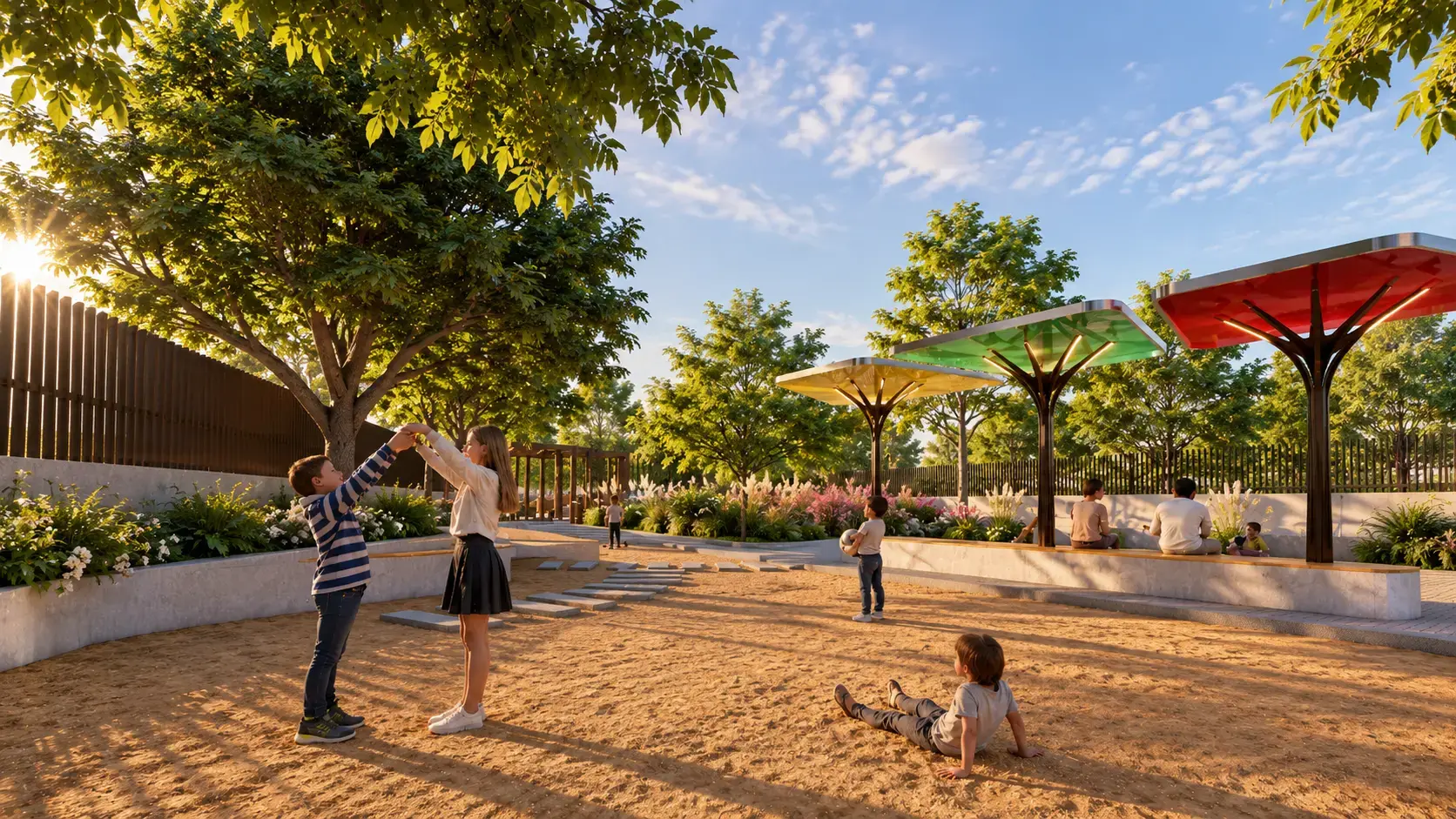
Beyond its ecological function, the park is designed as an inclusive everyday community space. Shaded pedestrian trails weave through herbal gardens, flowering landscapes and native planting, connecting play areas, informal seating spaces, viewing decks and quieter pockets for relaxation. A dedicated children's play zone, interactive landscape elements and shaded gathering areas encourage the park to be used by people across different age groups.
The landscape palette combines native and adaptive vegetation, large-canopy trees, ornamental grasses and water-sensitive planting, creating seasonal variation while improving biodiversity and reducing long-term maintenance requirements. Permeable surfaces and green pockets soften the predominantly hard urban surroundings and strengthen the visual and ecological relationship between the park and the adjoining lake.
At its core, the project demonstrates how urban infrastructure can become meaningful public space. Instead of simply draining rainwater away, the Sponge Park celebrates water as part of the landscape — creating a place that can absorb rain, restore ecology, recharge the ground and bring people closer to nature.
A park that does more than provide green space — it works with water, responds to climate and gives the neighbourhood a resilient landscape to grow around.
Gallery